If you’ve ever dealt with a dry, itchy, flaky scalp, then you will understand how tiresome it can be sometimes. For many with textured hair especially afro or tight coils, our unique hair textures make scalp care even more important to avoid build up and causing a plethora of scalp issues resulting to slow hair growth and even hair loss.
The use of oils on the scalp has long been a topic of debate. Some argue that applying oils can do more harm than good, especially when hair isn’t washed frequently, leading to product and oil buildup. Others, however, view oils and even traditional hair grease as essential for healthy, rapid hair growth, with many swearing by their effectiveness. From my personal experience caring for my natural hair over the past 14 years including three big chops I believe that certain oils can indeed benefit the scalp, particularly when gently massaged to stimulate circulation, coupled with a regular routine of washing, conditioning, deep conditioning and protein treatment. I’ve found even greater results when these oils are infused with herbs known for their soothing and healing properties. My perspective on this is shaped by both hands-on experience and a bit of research along the way.
We often find ourselves constricted by rigid rules on how things should be done especially when it comes to natural hair care. Take, for example, the debate around silicones and afro-textured hair. Personally, I’ve found that silicone-based conditioners make detangling much easier and help reduce breakage, and for that reason, I have no intention of giving them up. My experience has taught me that, cliché as it may sound, experience truly is the best teacher. Hair care is deeply personal, and what works for one person may not work for another. The key is learning what your own hair responds to if you’re fortunate enough to have the time, resources, and freedom to do so, as life’s circumstances don’t always make that possible.
There is a uniqueness to African culture in-regards to haircare – It is communal. It’s storytelling on Sunday-nights while detangling with your sisters. It is the braiding session booked with one of the aunties, it is simple yet effective. Black hair, in all its textured glory, requires moisture-focused and retention care. The tight coils and curls are prone to dryness not because our hair is unhealthy, but because it may be dry and unconditioned. This tingling scalp oil is about making space for intentional haircare in the comfort of your own home and sealing/locking in all the moisture into our hair strands.
Okay, now lets get into this recipe, the base oil I’m using is fractionated coconut oil because of its lightweight structure, also I have previously infused my fractionated coconut oil with fenugreek, dried nettle leaves, dried lavender flower and dried rosemary for almost a month. For good measure, scientific evidence indicates that it is one of the oils that can penetrate the hair fibres due to its triglycerides according to this research – https://www.mdpi.com/2079-9284/11/2/64#B36-cosmetics-11-00064.
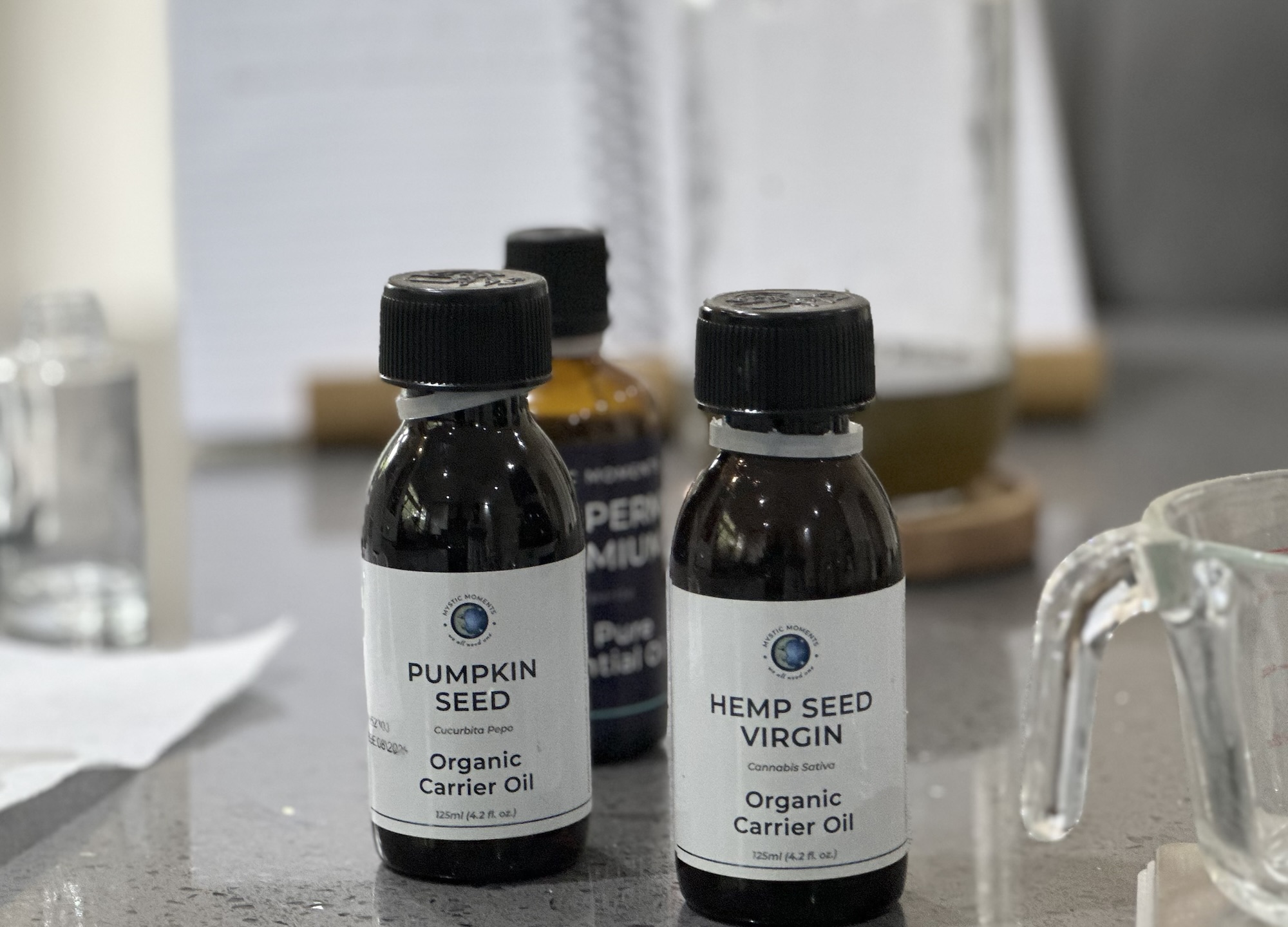
I included Pumpkin seed oil because of it contains phytosterols (especially β-sitosterol), which can block DHT (dihydrotestosterone), a hormone linked to hair loss. It is rich in omega-3 and omega-6 fatty acids, which support scalp health by reducing inflammation and keeping it moisturised.
And the zinc and magnesium in the oil also support healthy hair follicle function. In addition, peppermint essential oil adds the physical stimulating effect with the tingling sensation it creates whilst been massaged into the scalp.
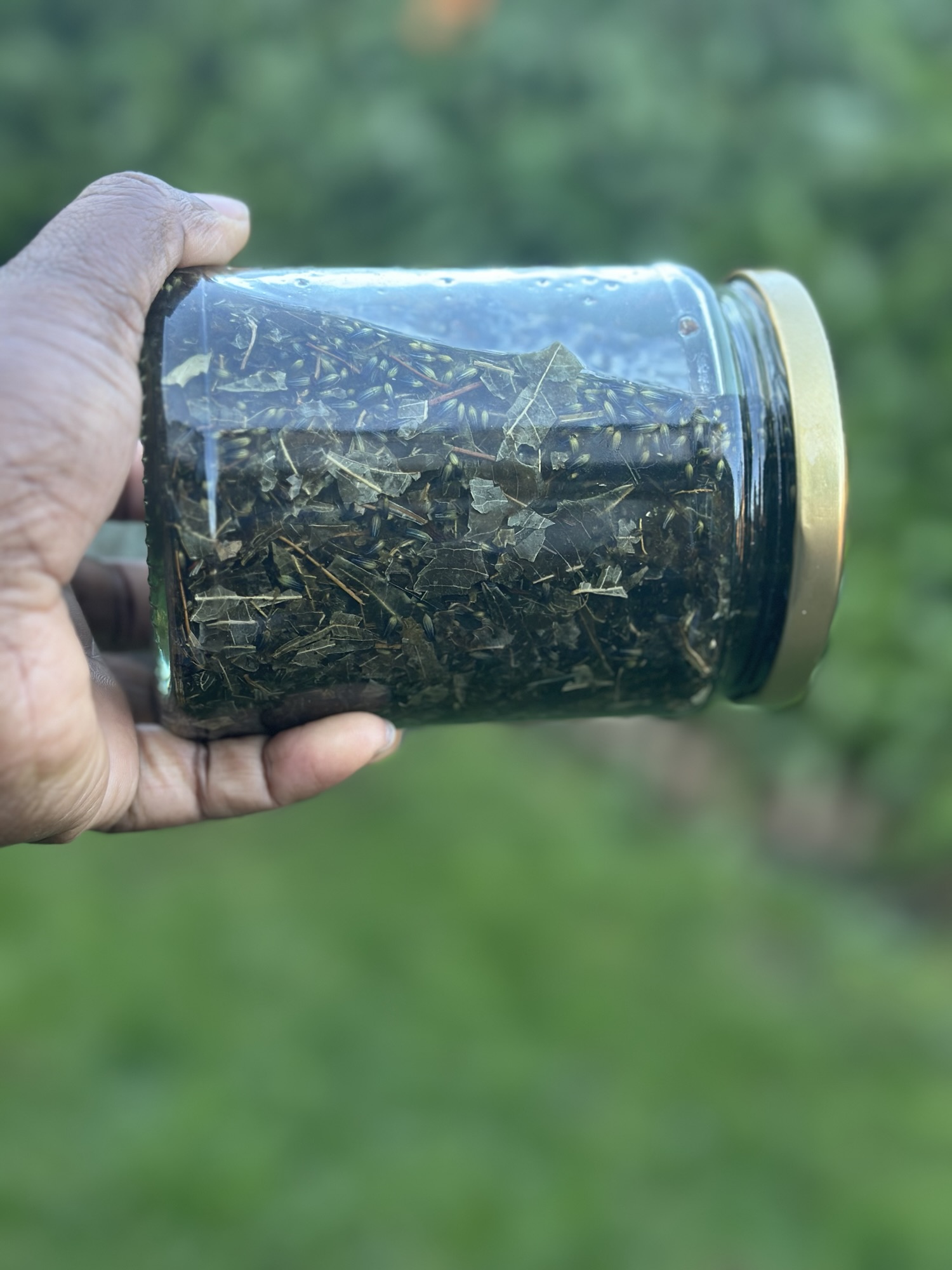
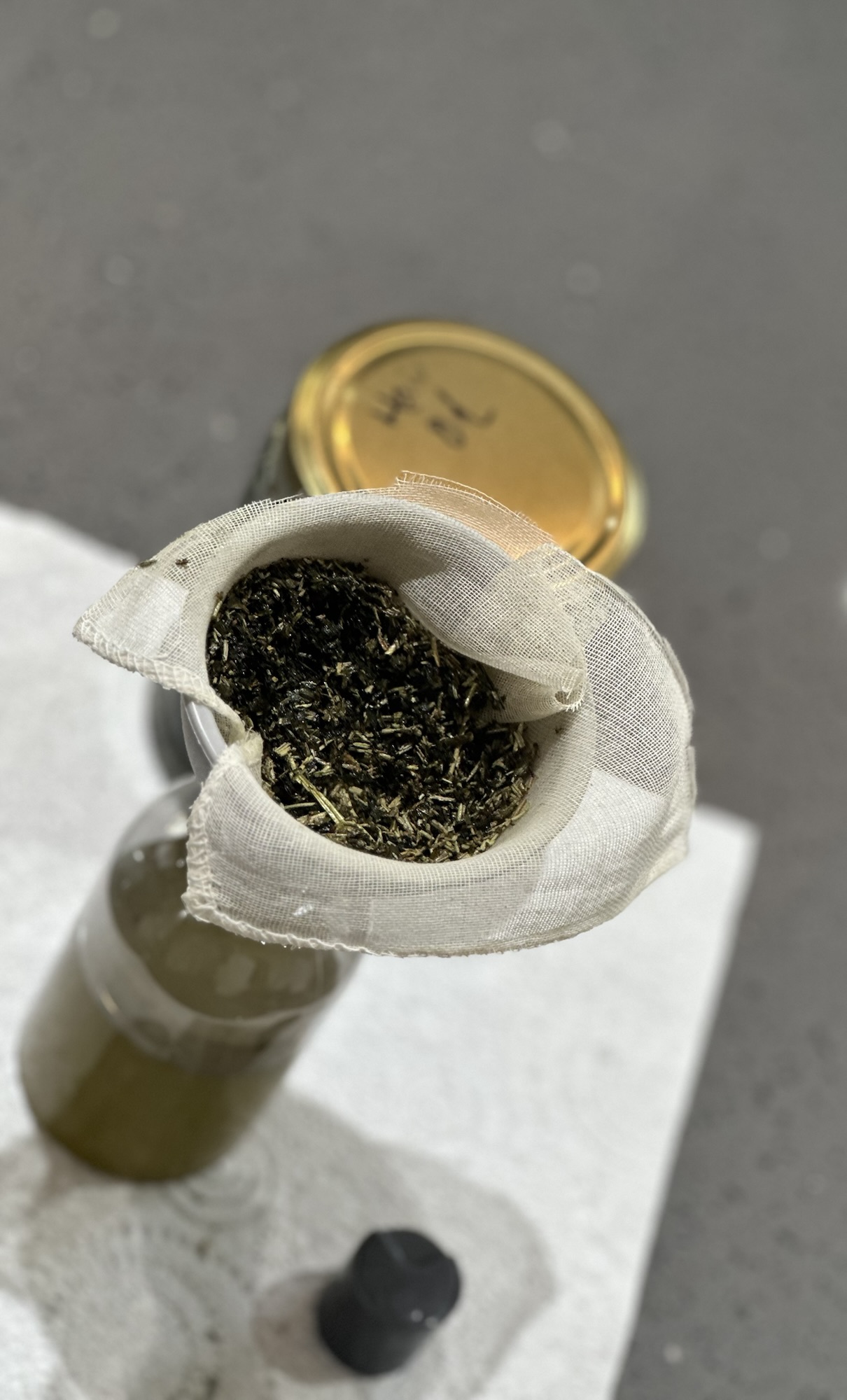
This is a 100 grams batch.
Infused Fractionated coconut oil 60% = 60 grams
Pumpkin seed oil 25% = 25 grams
Hempseed oil 14% = 14 grams
Peppermint essential oil 1% = 1 grams
Method
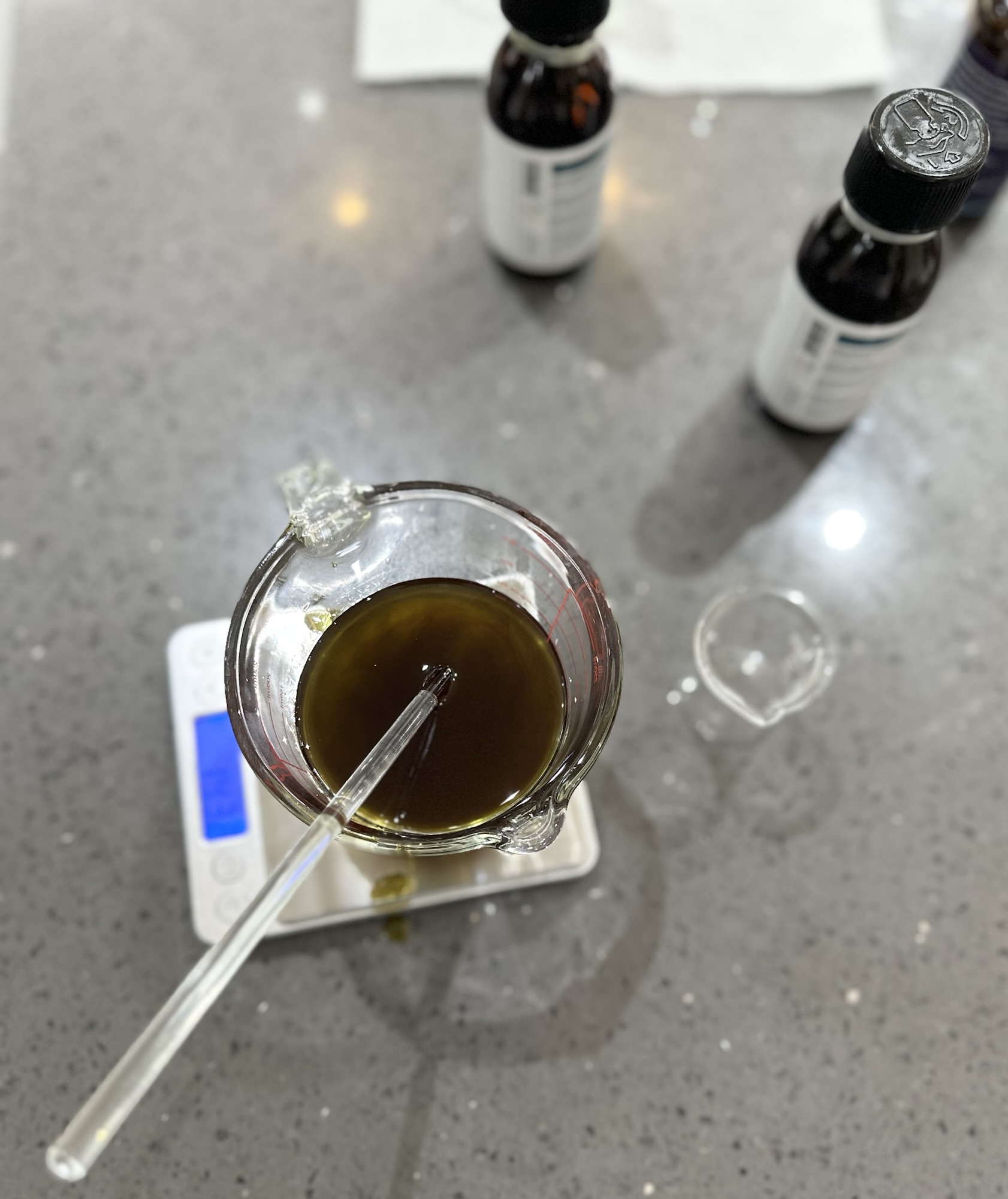
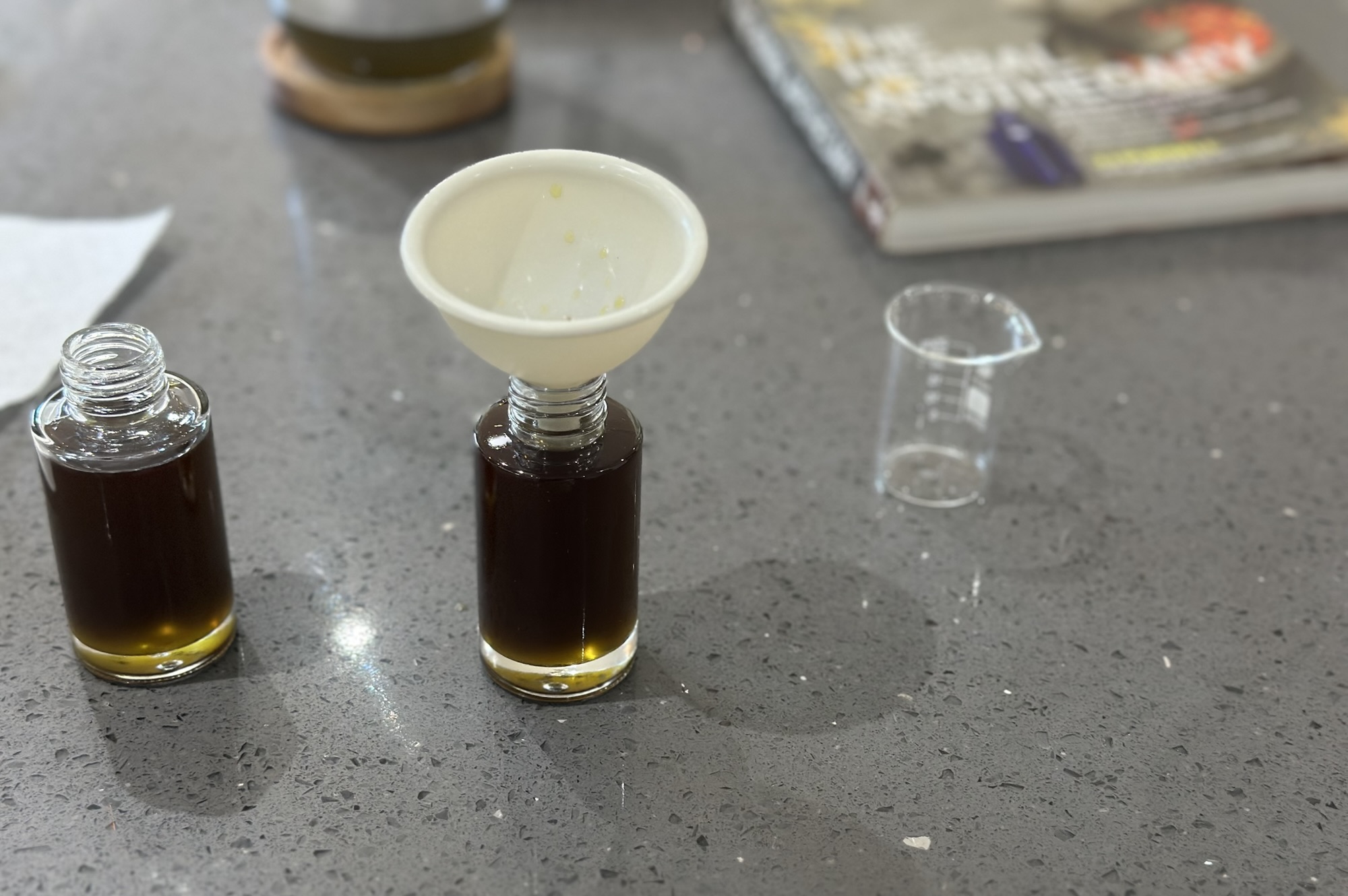
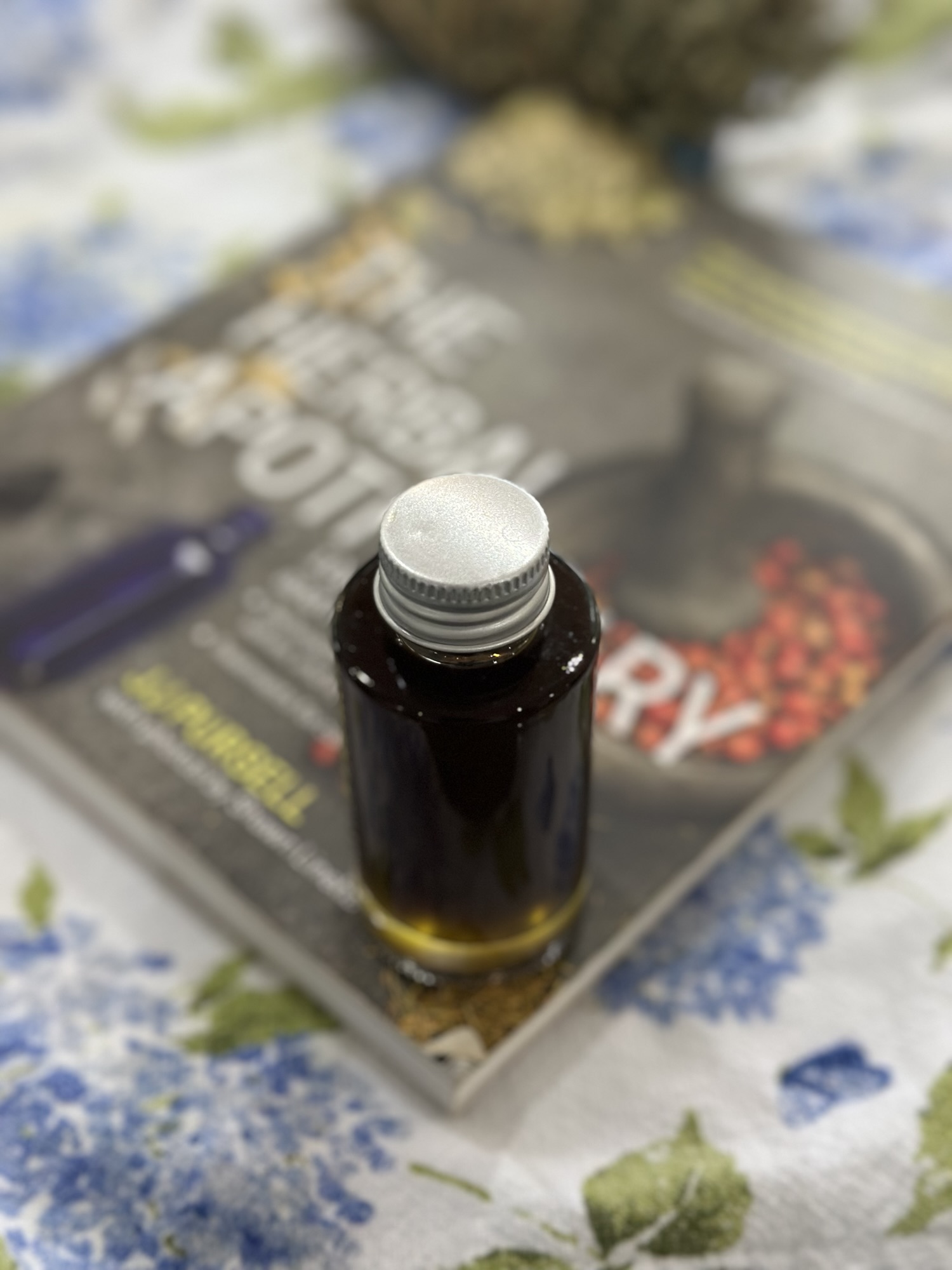
In a clean container, measure all the ingredients, mix and store in a suitable bottle.
Store in a cool, dark and dry place i.e inside a shelf or anywhere away from direct sunlight.
How To Use
Use as an hot oil treatment– warm up the oil blend by putting the whole bottle into a glass of very hot water and leaving for 5 to 7 minutes, carefully take it out, then apply and massage into scalp and hair.
Leave it on for 10 or 30 mintues depending on how much time you have, wearing a steamer cap or just regular plastic cap. Proceed to shampoo and condition and style as usaual.
Use as a leave-in massage scalp treatment or wash off after a few minutes or even overnight. Apply a few drops depending on your bottle of choice, I think a dropper bottle is always the better option in this case for easy application.
Use after hydration to lock in moisture. Apply after a using a leave in conditioner or any type of hydration water included, to seal in or lock in the moisture for softer strands and to prevent breakage.
Finally, I think whatever the oil you choose to incorporate into your hair care routine should be well researched but not necessarily expensive and most importantly accessible and it should be coupled with a good hair care routine for optimum results.
Thank you so much for your support and leave your thoughts in the comments below.
 tlgemsandmixes