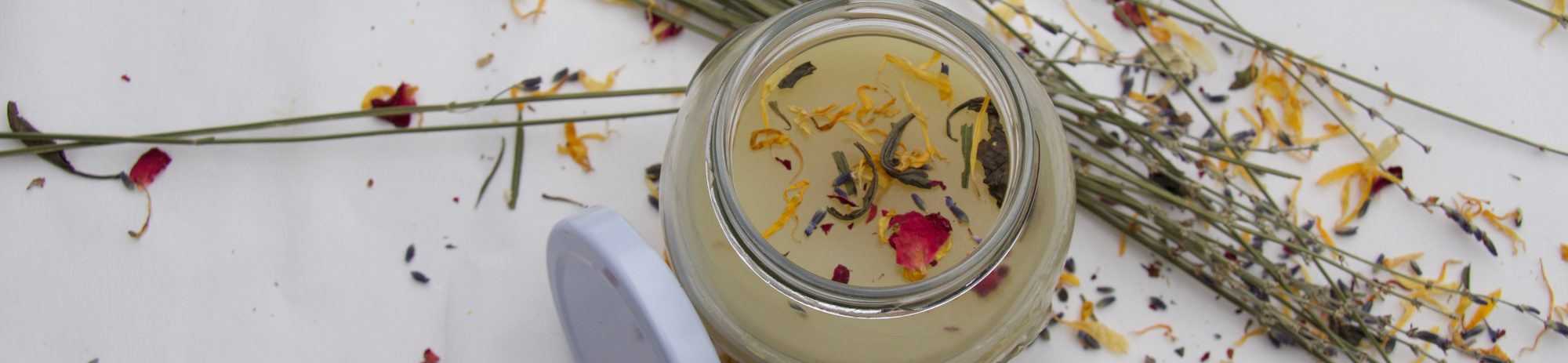
Oil cleansing as the name implies means cleansing your face with oil, yes OIL!. I have known of oil cleansing method for a while. I even tried it once or twice before. But I went back to my ‘normal’ cleanser. Nevertheless, my skin’s sensitivity to harsh ingredients had me seeking different ways to cleanse my skin without the over drying and itchiness.
This lead me back to oil cleansing.
According to theoilcleansingmethod.com, the skin naturally lubricates itself with oil. Applying natural plant oils to the face helps dissolve hardened oil. It also removes impurities on the skin.
THE BASIC METHOD
What you do is blend natural preferable oils that will not clog your pores i.e safflower oil, sunflower oil, castor oil etc. Massage it in on your face in a gentle and circular motion for a few seconds.
Take a soft cloth or muslin face towel. Drench it in warm but not hot water. And use it to wipe away the oil. Repeat this step two to three times and pat dry.
Continue with a toner to balance out your skin in preparation for your moisturizer or any other treatment. The skin is left feeling fresh and moisturized.

Introducing Polysorbate 80
Polysorbate 80 is a nonionic surfactant and emulsifier commonly used in oil blends to help water and oil mix effectively. It is derived from sorbitol and oleic acid and is widely used in cosmetics, skincare, and pharmaceutical formulations.
Acts as an Effective Emulsifier
- Polysorbate 80 allows oil and water to mix by reducing surface tension, creating a stable emulsion.
- Prevents oil separation in oil-based formulations like cleansers, serums, and hair oils.
Improves Oil Dispersion in Water
- It is a hydrophilic emulsifier that helps distribute oils evenly in water-based solutions.
- Ensures even application of oil blends on the skin or hair, preventing greasy or uneven residue.
Boosts Cleansing Power in Oil Cleansers
- Allows oil cleansers to rinse off cleanly with water, leaving no greasy residue.
- Works as a mild surfactant, helping to lift oil, dirt, and makeup from the skin.
THE RECIPE
Safflower Oil : 62% = 120 grams
Polysorbate 80 : 12% = 24 grams
Jojoba Oil : 10% = 20 grams
Raspberry Oil : 9% = 18 grams
Castor Oil : 5% = 10 grams
Vitamin E Oil : 1% = 2 grams
Essential Oil : 1%. = 2 grams (This is optional, you can substitute with a more oil)
THE METHOD
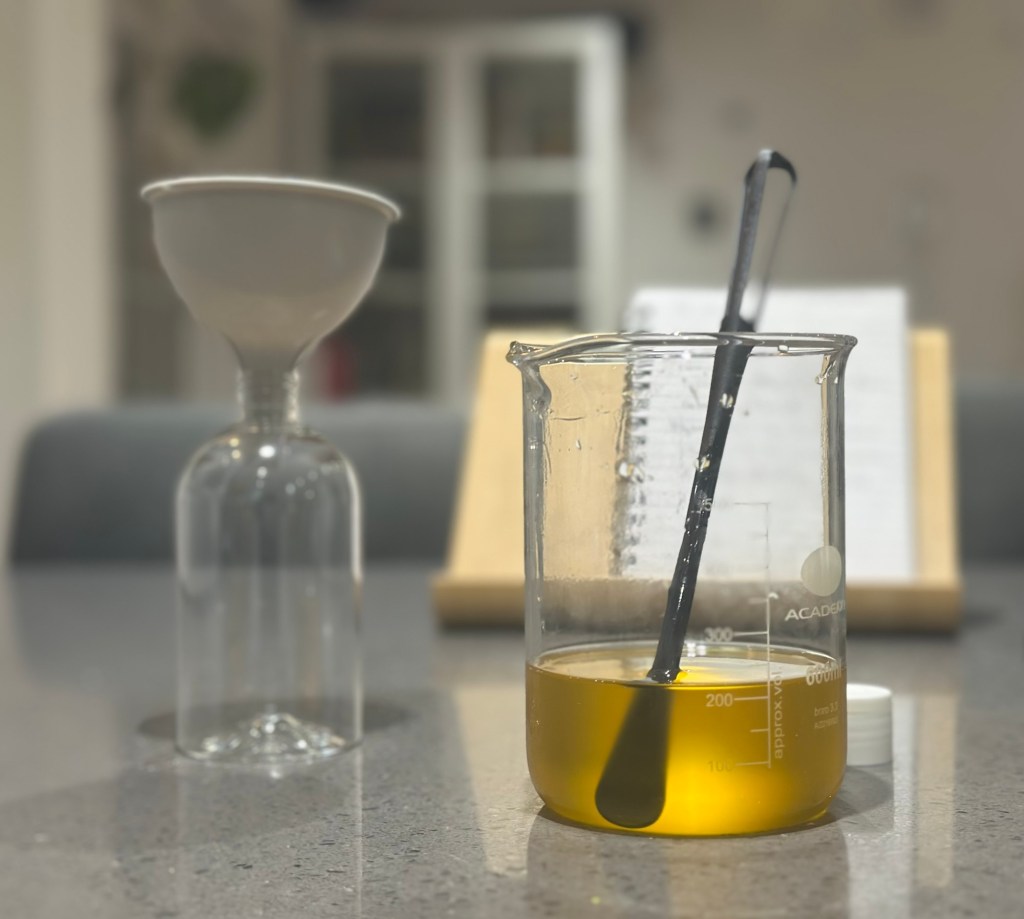
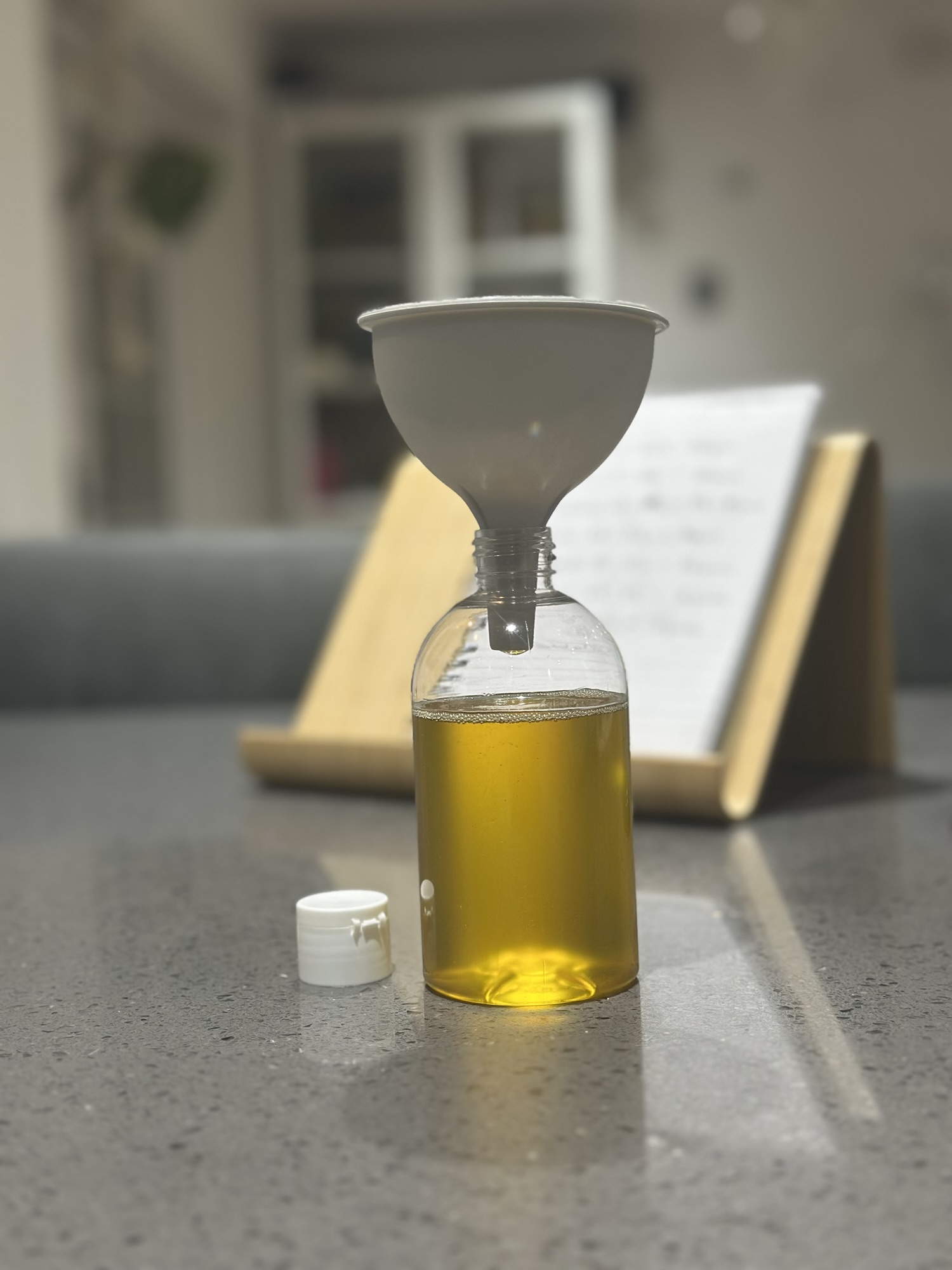
All you need to do is measure all your ingredients into a clean jar and mix thoroughly with a spatula.
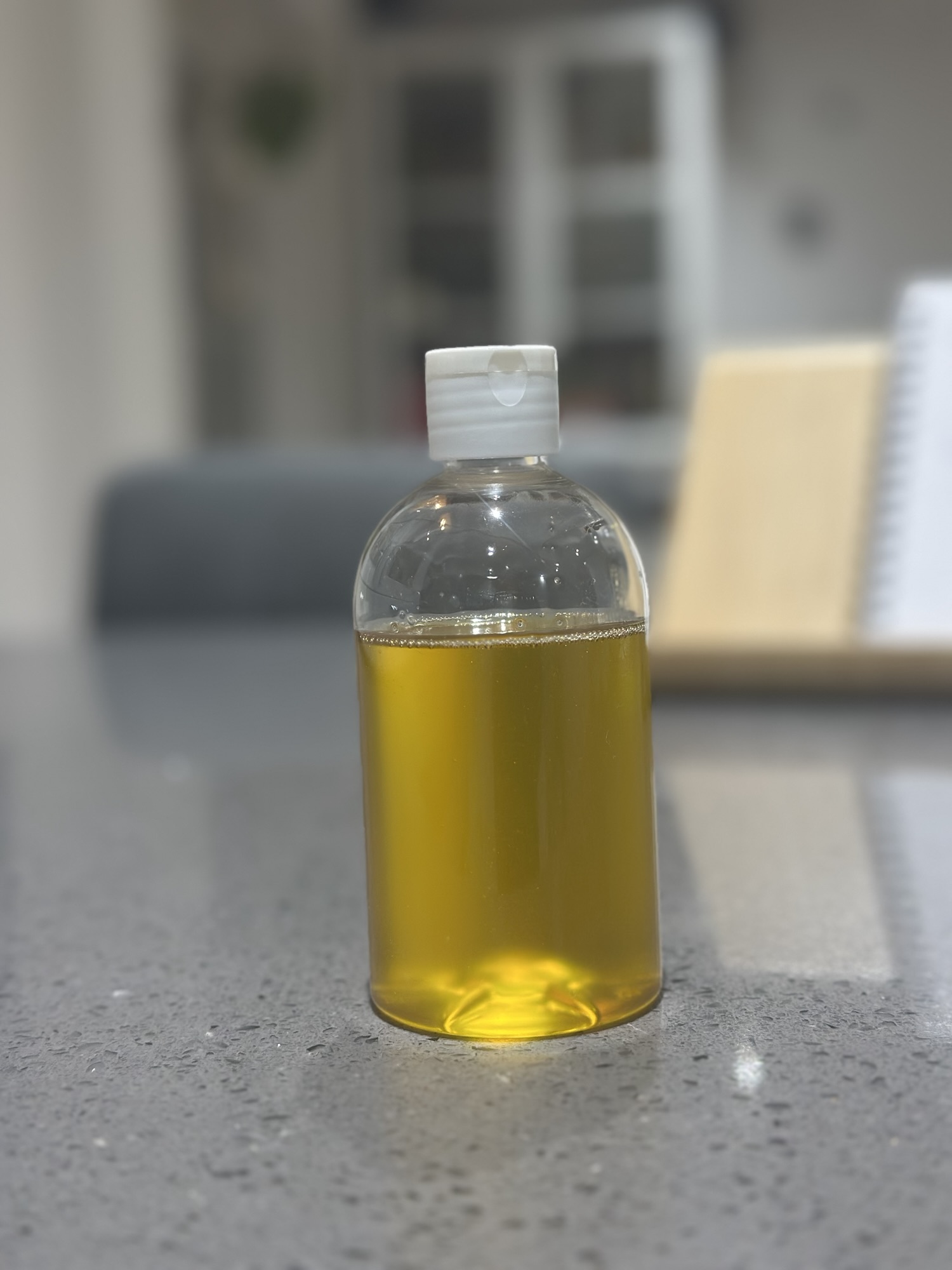
Decant into an appropriate dispenser bottle.
HOW TO USE
Pour a desirable amount in your palm and massage on a dry skin.
After massaging for a few seconds, add water. The oil will emulsify and turn milky. Continue massaging and rinse off with ease.
Gently pat dry and carry on with a toner.
WHY CASTOR OIL IS IMPORTANT.
- Castor oil has a high concentration of ricinoleic acid (85-95%). This monounsaturated fatty acid has strong solvent properties. These properties help break down oil-based impurities like makeup, sunscreen, and excess sebum.
- Ricinoleic acid has been shown to reduce inflammation and redness.
- It effectively removes dirt, bacteria, and waterproof products without stripping the skin of natural oils.
- Castor oil supports skin cell turnover, promoting a healthier complexion.
- Works well with other cleansing oils (e.g., jojoba, almond, olive) to create a balanced formula.
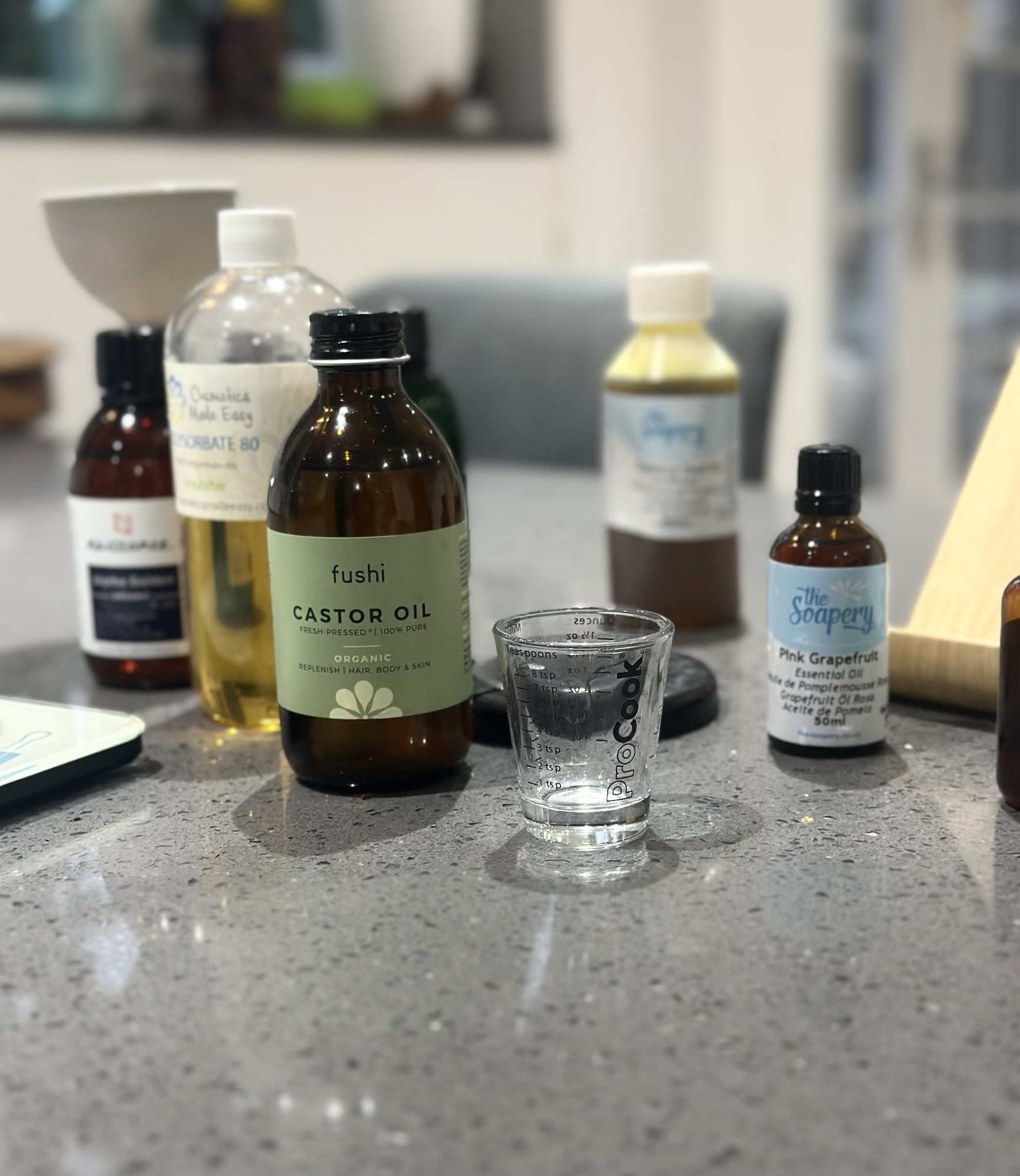
The interesting thing about making your own skincare product is the realization that simple is effective. Products or ingredients do not need to be complicated at all to work and be functional. Hoping this inspires you to try or get familiar with easy skin care formulation.
Thank you so much for reading and supporting.
 tlgemsandmixes